Free on every plan · Always
Safety that goes fishing with you.
Float plans you file and share, live GPS tracking, an SOS button, weather, and ice safety — free on every plan. Free and Pro both get the full safety stack. Always.
No credit card · Float plans + GPS + SOS available the moment you sign up
Why this is free
Filing a float plan before every outing is a fishing safety requirement, not a premium feature. We never want a paywall standing between an angler and the SOS button.
The full safety stack
SOS button
Hold the SOS button to surface your last known position, boat info, and the float plan you filed, so you can call 911 or hail the Coast Guard fast. No subscription gate — every angler gets this.
- ✓Manual SOS — hold to fire
- ✓Surfaces your last known lat/lng, boat info, and float plan
- ✓Free on every plan — never paywalled
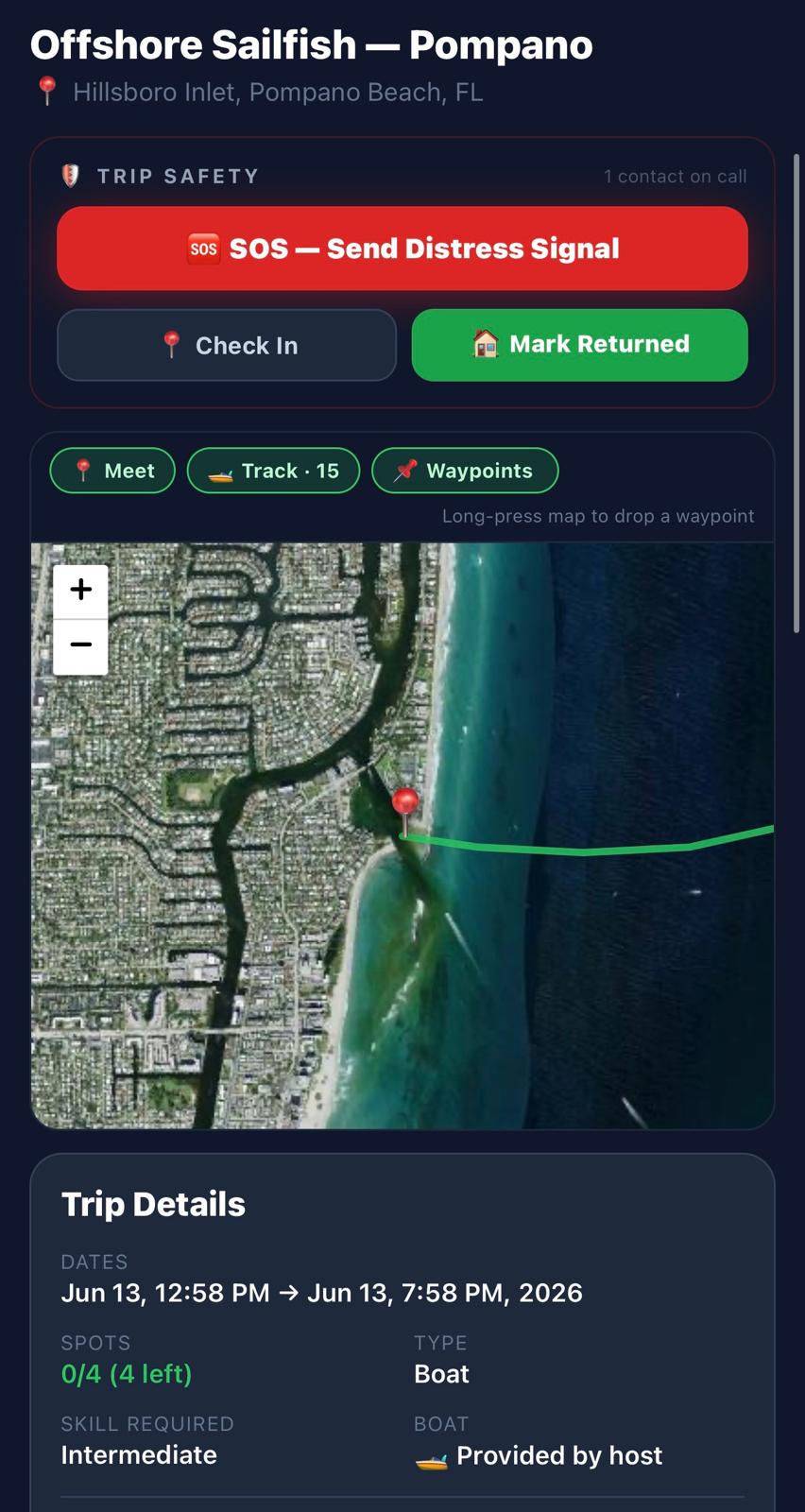
SOS, Check-In, and Mark-Returned all live on the trip itself — one tap from anywhere on the boat.
Live GPS tracking
When your float plan is active, the app logs a position ping every few minutes so your route is recorded — with distance covered, current speed, and battery left — and you can share your float plan with someone on shore before you launch.
- ✓Background-friendly battery use
- ✓Live distance + speed + heading metrics
- ✓Last known position retained for 7 days after the trip closes
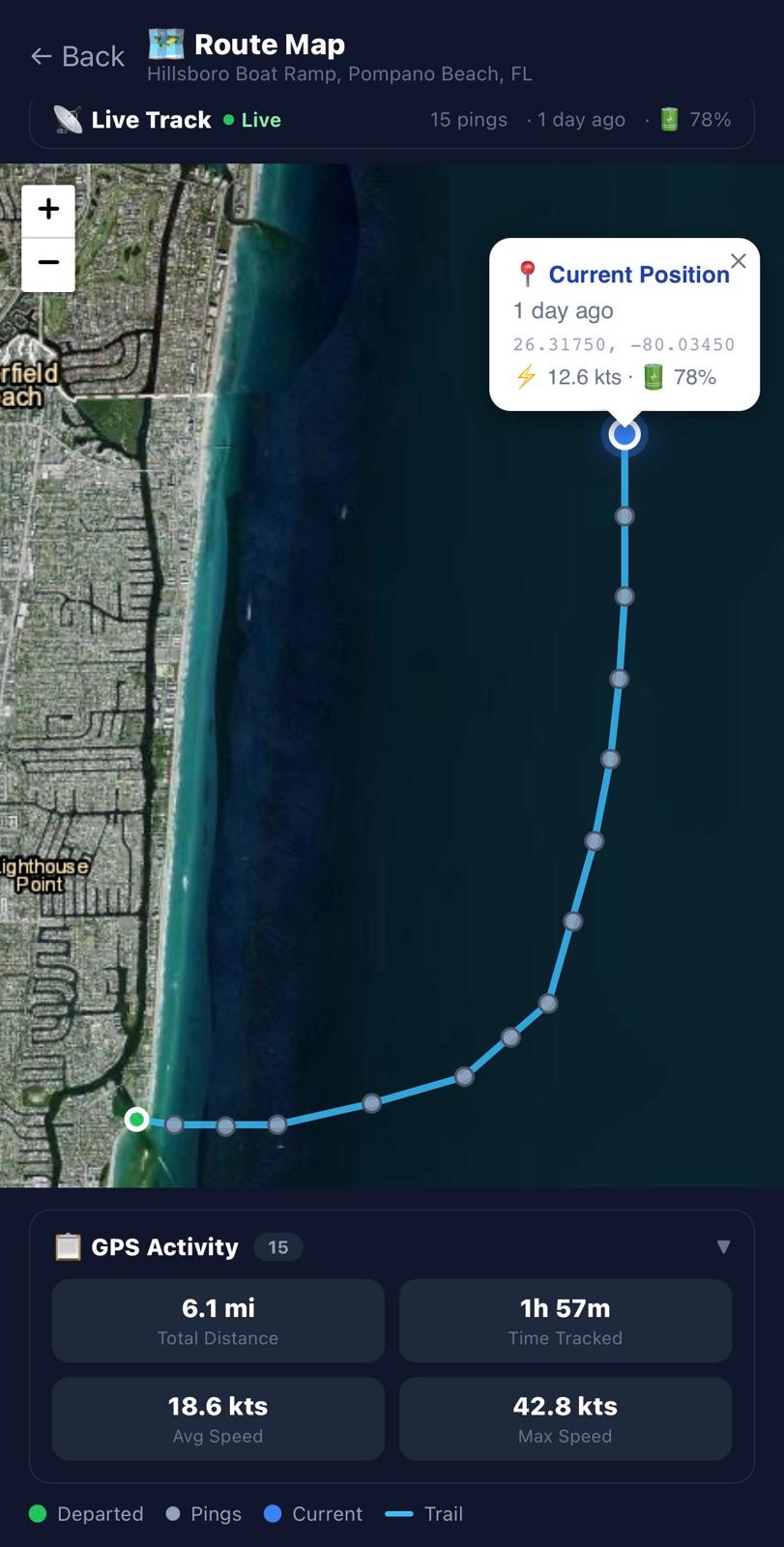
Your contact watches the trail draw itself in real time — speed, battery, last update — no app to install.
Float plans
File a plan in 30 seconds — meet point, route, expected return, who to call if you don't check in. The plan is shareable with a spouse, a bud, or the marina.
- ✓Where you launched and where you're going
- ✓Expected return time + grace period
- ✓Who to notify if you're overdue
- ✓Boat info: registration, hull color, fuel
QR crew check-in (in the app)
Every trip gets a Trip Pass. At the ramp, scan your crew in with the app's camera so the host knows everyone physically made it — before the boat ever leaves the dock.
- ✓Scan crew in at the launch with the phone camera
- ✓Host sees who's checked in in real time
- ✓Mobile app only — no web version
Live weather alerts
When NOAA pushes a small-craft advisory, severe thunderstorm warning, or marine warning to your area while you're fishing, you get a push notification.
- ✓Real-time NOAA marine weather feeds
- ✓Localized to your float plan's area
- ✓Lightning-strike proximity alerts (US only, alpha)
Ice safety
Ice fishing has its own playbook. Ice thickness reports per body of water, surface temperature trends, and pre-departure checklists for the gear you actually need.
- ✓Community ice-thickness check-ins
- ✓Auger-needed depth recommendations
- ✓Buddy-check reminder when you go through
Frequently asked
Why is safety free?
Filing a float plan before every outing is a fishing safety requirement, not a premium feature. We don't want a paywall standing between an angler and the SOS button.
Do you sell my location data?
No. Float plan positions are stored only for the duration of the plan + 7 days, are visible only to you and the emergency contacts you name, and are never shared with advertisers.
What if I have no cell service?
The plan is filed before you launch, so your contacts already have it. The phone caches GPS pings and uploads them when service returns. SOS over cell, satellite messengers (Garmin inReach, ZOLEO) integration is on the roadmap.
Does it drain my battery?
No more than navigation apps. We tune the GPS sampling rate based on speed: slow when you're anchored, fast when you're running. Most users report ~5–8% per hour of plan time.
Is SOS the same as calling 911?
No — the SOS button surfaces your last known position and the float plan you filed so you can get help fast. For immediate life-threatening situations, call 911 (or USCG channel 16) directly.
Fishing safety questions, answered
Do I need a float plan to go fishing?
A float plan is strongly recommended any time you head out on the water, especially alone. It is the U.S. Coast Guard’s number-one safety recommendation: a simple record of where you are going, your vessel, and when you expect to be back, left with someone on shore. MyFishingBuds lets you file one in seconds and share a live link, free on every plan.
What is a float plan and what should it include?
A float plan lists your destination, launch point, vessel description, who is with you, the gear and safety equipment aboard, and your expected return time. You give it to a reliable person on shore before you leave so they know when to raise the alarm if you do not check in. On MyFishingBuds it also carries a live GPS link so they can watch your position in real time.
Is it safe to fish alone?
Solo fishing is popular but carries real risk — falls, cold water, and boat trouble are far more dangerous with no one there to help. If you fish alone, always file a float plan and share it, wear a life jacket, and keep a charged phone or VHF radio on you. Finding a fishing buddy is the safest option, which is exactly what MyFishingBuds is built for.
How does the MyFishingBuds SOS button work?
Holding the SOS button surfaces your last known GPS position, your boat information, and the float plan you filed, and opens a pre-filled distress message you can send to your emergency contact. It is designed to help you call for help fast — it does not replace calling 911 or hailing the U.S. Coast Guard on VHF Channel 16, which you should always do in a real emergency.
Does MyFishingBuds alert my emergency contact automatically?
MyFishingBuds lets you file a float plan and share a live GPS link with someone on shore, and the SOS button opens a pre-filled text to your emergency contact for you to send. In a genuine emergency, always call 911 or hail the U.S. Coast Guard on VHF Channel 16 directly — no app is a substitute for emergency services.
What safety gear do I need for fishing?
At a minimum: a properly fitted life jacket (worn, not stowed), a charged phone in a waterproof case or a VHF radio, a whistle or air horn, weather-appropriate clothing and layers, drinking water, and a basic first-aid kit. For boats, add the Coast Guard-required equipment for your vessel size. And before you leave, file and share a float plan.
How thick does ice need to be to fish on safely?
General guidance for new, clear ice is at least 4 inches for walking and ice fishing on foot, 5–7 inches for a snowmobile or ATV, and 8–12 inches for a small car. White or slushy ice is much weaker — treat published numbers as minimums, never guarantees, check with local anglers, and carry ice picks and a float suit. When in doubt, stay off.
Is the safety system on MyFishingBuds free?
Yes. Float plans, live GPS tracking, the SOS button, weather alerts, and ice safety features are free on every plan — Free and Pro alike. We never put a paywall between an angler and getting home safe.
What should I do in a fishing emergency?
Call 911 immediately, or hail the U.S. Coast Guard on VHF Channel 16 if you are on the water. Give your location (GPS coordinates if you have them), the nature of the emergency, and how many people are involved. If you filed a float plan, your contact on shore already has your details and expected return time to relay to responders.
File your first float plan in 30 seconds.
Free forever. No credit card. Every angler gets the full safety stack — Float plans + GPS + SOS — on every plan.
Get Started Free →